
A Theravadin Mandala?
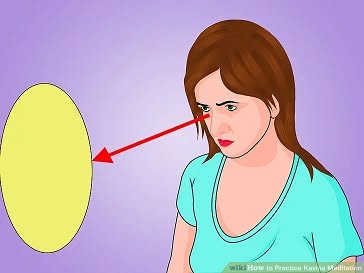
It is clear that Buddha taught how to meditate using various visualization devices called kasina. The basis for this practice can be found in some sutta, notably the Satipatthana Sutta. There are 10 types of kasinas listed in the Pali scriptures. In a few cases, even everyday, ordinary objects were also used in introspection or contemplation.
The efficacy of the kasina seem to lie in their simplicity which allow the mind to calm down and to go into deep concentration. The technique also relies on the meditator being able to move from focusing on an external object and eventually internalizing that process of focusing. Kasina meditation can be helpful for those having difficulty with closed-eye meditation (e.g. most vipassana methods) or open-eye meditation with no visual focusing (e.g. Zen).
Given that nowhere in the early Buddhist texts are elaborate mandalas described or recommended, is there a place for mandala meditation in a Theravadin’s practice? The answer is to look around & see if mandala meditation has benefitted any practitioners. Just like taking modern medicine even if these were not mentioned by the Buddha, Buddhists of all branches must be open-minded enough to explore practices that are beneficial, wholesome and liberating.
This scientific study compares Vajrayana meditation & Theravada meditation, which included kasina meditation.
The study concluded that, “our results show that Theravada meditations produce RELAXATION responses, while Vajrayana types of meditation produce AROUSAL, suggesting that Theravada meditations could be more appropriate for stress reduction than Vajrayana, …”
It also noted that, “while Vajrayana meditation activated the sympathetic system, it did not lead to a stress response,…”
The Buddhist teachings on spiritual liberation talks about 7 Factors of Enlightenment, 3 of which are towards relaxation & another 3 are towards arousal. There is always room to explore different meditation techniques, if only to avoid falling into the extremes of too much relaxation or too much arousal. As mentioned before, the kasina is used to achieve tranquility (& concentration). For Theravada meditators looking for a visualization technique that produces energetic arousal, a mandala practice aligned with Theravada principles may be helpful.